



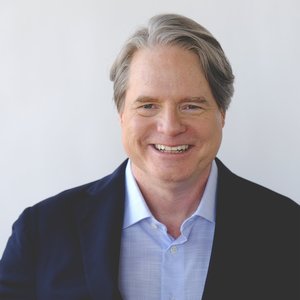
Michael W. Morris
- Media Contact
- SPN Mentor
Michael Morris works as a cultural psychologist at Columbia University in its Graduate School of Business and its Psychology Department. Previously, he taught for a decade at Stanford University. Morris received his Ph.D. in Psychology from the University of Michigan after undergraduate degrees in Cognitive Science and in English Literature at Brown University. His research has discovered cultural influences on styles of cognition, communication, and collaboration, as well as situational factors that cue them and social experiences that shift them.
Outside of academia, Professor Morris advises corporations, government agencies, NGOs, and political campaigns about culture-related issues. He lives in New York City.
Primary Interests:
- Aggression, Conflict, Peace
- Causal Attribution
- Culture and Ethnicity
- Emotion, Mood, Affect
- Judgment and Decision Making
- Organizational Behavior
- Person Perception
- Persuasion, Social Influence
- Self and Identity
- Social Cognition
Note from the Network: The holder of this profile has certified having all necessary rights, licenses, and authorization to post the files listed below. Visitors are welcome to copy or use any files for noncommercial or journalistic purposes provided they credit the profile holder and cite this page as the source.
Image Gallery
Video Gallery

Classical Multiculturalism vs. Polyculturalism
Select video to watch
-
1:57 Classical Multiculturalism vs. Polyculturalism
Length: 1:57
-
23:02 Un-Follow the Leader
Length: 23:02
-
0:56 There's a Revolution Underway in Organizational Culture Research
Length: 0:56
Presentations
Books:
-
Morris, M. (2024). Tribal: How the cultural instincts that divide us can help bring us together. New York: Thesis/Penguin.
- Linked presentation: Notice about Tribal
Journal Articles:
- Chua, R. Y. J., Morris, M. W., & Ingram, P. (2010). Embeddedness and new idea discussion in professional networks: The mediating role of affect-based trust. Journal of Creative Behavior, 44, 85-104.
- Mok, A., & Morris, M. W. (2010). Asian-Americans’ creative styles in Asian and American situations: Assimilative and contrastive responses as a function of bicultural identity integration. Management and Organization Review, 6(3), 371-390.
- Morris, M. W., & Amanatullah, E. T. (2010). Negotiating gender roles: Gender differences in assertive negotiating are mediated by women’s fear of backlash and attenuated when negotiating on behalf of others. Journal of Social and Personality Psychology, 98, 256-267.
- Morris, M. W., & Leung, K. (2010). Creativity East and West: Perspectives and parallels. Management and Organization Review, 6(3), 313-327.
- Savani, K., Morris, M. W., Naidu, N. V. R., Kumar, S., & Berlia, N. V. (2011). Cultural conditioning: Understanding interpersonal accommodation in India and the United States in terms of the modal characteristics of interpersonal influence situations. Journal of Personality and Social Psychology, 100, 84-102.
- Weber E. U., & Morris, M. W. (2010). Culture and judgment and decision making: The constructivist turn. Perspectives on Psychological Science, 5(4), 410-419.
Courses Taught:
- Advanced Seminar on Leading Teams
- Conflict Management and Negotiation
- Culture, Organization and Cognition
- Managerial Negotiations
- Managing Through Mutual Agreement
- Organizational Behavior
- Social Psychology of Organizations
Michael W. Morris
Columbia Business School
399 Kravis Hall
665 West 130th Street
New York, New York 10027
United States of America
- Phone: (212) 854-2296